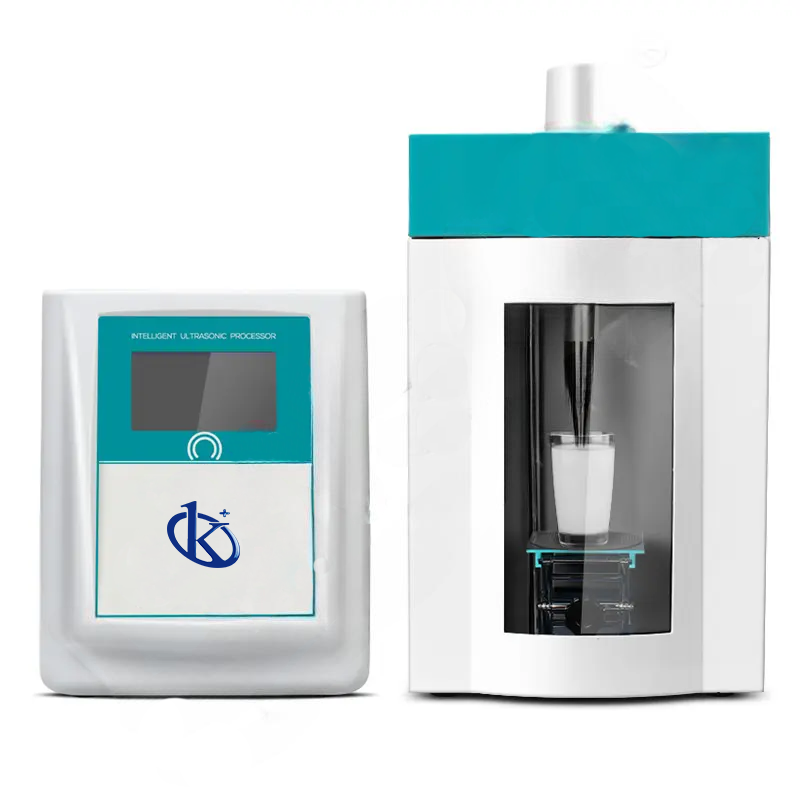
Ultrasonic Homogenizers: ROI and Cost-Benefit Analysis for the Lab 2026
Ultrasonic homogenizers represent a pivotal technology in laboratory processes, particularly within biochemical and material science applications. As laboratories increasingly focus on efficiency and budget management, understanding the return on investment (ROI) and cost-benefit specifics of ultrasonic homogenizers becomes critical. This article delves into the financial implications of investing in these devices, comparing multiple models to provide a comprehensive analysis.
Understanding Ultrasonic Homogenizers through ROI
The use of ultrasonic homogenizers in laboratories has surged due to their efficiency in sample preparation and processing. However, the benefits transcend mere functionality; they extend into financial realms that are essential for laboratory managers to grasp. Evaluating ROI involves assessing the costs associated with purchasing, operating, and maintaining ultrasonic homogenizers against their contributions to productivity and output quality.
Comparison of Available Models
| Model | Capacity (ml) | Power (W) | Price (USD) | Best For |
|---|---|---|---|---|
| YR05015 | 0.1 – 150 | 1.5 – 150 | 756.00 | Small sample homogenization |
| YR05016 | 0.1 – 300 | 2.5 – 250 | 882.00 | Medium sample homogenization |
| YR05017 | 0.1 – 500 | 10 – 650 | 1050.00 | High-throughput applications |
| YR05018 | 0.1 – 600 | 10 – 900 | 1281.00 | Versatile laboratory use |
| YR05019 | 1 – 1000 | 20 – 1200 | 1785.00 | Large volume processing |
| YR05020 | 1 – 1200 | 50 – 1800 | 2058.00 | Industrial scale homogenization |
Cost-Benefit Analysis of Ultrasonic Homogenizers
Assessing the cost-benefit of ultrasonic homogenizers involves a detailed examination of both the direct and indirect costs associated with their operation. Direct costs include initial purchase price and maintenance, while indirect costs consider labor efficiency and sample quality improvements.
To illustrate, consider a lab using the YR05019 model, priced at $1785.00. If this model improves throughput by 30% compared to traditional methods, this would translate into higher output per hour, thereby justifying its cost. Additionally, less time spent on manual homogenization means labor costs decrease, enhancing overall ROI.
Quantitative Breakdown of ROI
The ROI can be calculated by comparing the net gain from the ultrasonic homogenizer to its total cost. Here’s a formula to consider:
ROI (%) = [(Net Gain from Investment - Cost of Investment) / Cost of Investment] x 100
For example, assume the YR05020 model leads to a net gain of $5000 in productivity over a year. The ROI would be calculated as follows:
ROI (%) = [(5000 - 2058) / 2058] x 100 = 142.4%
Such figures demonstrate significant financial viability for investing in ultrasonic homogenization technology.
Common Mistakes and How to Avoid Them
Many laboratories make common mistakes when investing in ultrasonic homogenizers, which can lead to suboptimal results. One primary mistake is underestimating the power requirements. For instance, selecting a model like the YR05015 for applications requiring the capacity of YR05020 can lead to inefficiencies and increased operational costs.
Another frequent error is failing to consider the total cost of ownership, which includes consumables, maintenance, and energy usage. Laboratories must conduct thorough evaluations of each model's operational costs over time to truly understand their financial impact.
Maximizing Efficiency with Ultrasonic Homogenizers
Operational efficiency can be maximized by strategically selecting the appropriate model for specific tasks. For example, the YR05017 is ideal for medium to high-throughput applications, making it suitable for labs focused on increasing sample volumes without sacrificing quality.
Implementing routine maintenance schedules is also crucial. This not only ensures the longevity of the equipment but minimizes downtime, further enhancing productivity.
Energy Consumption and Sustainability Considerations
As laboratories strive for sustainability, energy consumption becomes a critical factor. Ultrasonic homogenizers typically consume significant energy during operation. Understanding the kilowatt-hours (kWh) used per batch can lead to more sustainable practices.
| Model | Average Energy Consumption (kWh) | Operational Hours per Day | Annual Energy Cost (USD) |
|---|---|---|---|
| YR05015 | 0.5 | 4 | 730.00 |
| YR05016 | 0.7 | 4 | 1028.00 |
| YR05017 | 1.2 | 4 | 1460.00 |
| YR05018 | 1.5 | 4 | 1825.00 |
| YR05019 | 2.0 | 4 | 2430.00 |
| YR05020 | 2.5 | 4 | 3035.00 |
By selecting energy-efficient models and operating them judiciously, laboratories can significantly reduce their carbon footprint while also optimizing their budget.
Frequently Asked Questions
What is the cost of an ultrasonic homogenizer in 2026?
In 2026, the prices for ultrasonic homogenizers vary significantly by model. For example, the YR05015 model is priced at $756.00, while the high-end YR05020 is priced at $2058.00, reflecting the capabilities and applications suited for different laboratory needs.
How do ultrasonic homogenizers improve lab productivity in 2026?
Ultrasonic homogenizers, such as the YR05019, can enhance lab productivity by reducing sample processing times by up to 30%. This increase in efficiency translates to higher throughput, allowing labs to handle more samples within the same timeframe, thus improving overall operational efficiency.
Which ultrasonic homogenizer is best for high-throughput applications?
The YR05017 model is ideally suited for high-throughput applications. It supports sample capacities of up to 500 ml and has a powerful output of up to 650W, making it perfect for labs focused on maximizing sample processing without compromising quality.
What factors affect the ROI of ultrasonic homogenizers in laboratories?
Factors affecting ROI include initial purchase costs, operational efficiency, maintenance expenses, and the overall improvement in throughput. For instance, investing in a powerful model like the YR05020 can yield a higher ROI due to its large capacity and efficiency, justifying its higher initial cost.
How can labs reduce costs associated with ultrasonic homogenizers?
Labs can reduce costs by choosing energy-efficient models such as the YR05015 and by implementing a regular maintenance schedule to prolong the unit's life. Additionally, minimizing downtime and maximizing operational efficiency directly contribute to reducing overall costs.
What energy consumption should be expected from ultrasonic homogenizers?
Energy consumption varies by model. For example, the YR05020 consumes approximately 2.5 kWh per hour during operation, which can translate to an annual cost of around $3035.00. Labs should consider energy-efficient practices to manage these costs effectively.
Which ultrasonic homogenizer is best for small sample sizes?
The YR05015 is optimal for small sample sizes, offering a capacity range of 0.1 to 150 ml. This model balances power and efficiency, making it suitable for labs focusing on small-scale applications without sacrificing performance.
What is the expected lifespan of ultrasonic homogenizers in laboratory settings?
The expected lifespan of ultrasonic homogenizers like the YR05019 can range from 5 to 10 years with proper maintenance. Regular servicing and following operational guidelines can significantly extend their durability and functionality.
If you are looking for a fusion of innovation and quality, you have come to the right place. At Kalstein, we offer you the luxury of exploring our exclusive catalog of laboratory equipment. We manufacture every device to the highest standards of excellence. Our intuitive and seamless online purchasing channels are designed for your convenience, securing the most competitive prices. Hesitate no longer — we bring science to life, it is time to become part of our community.