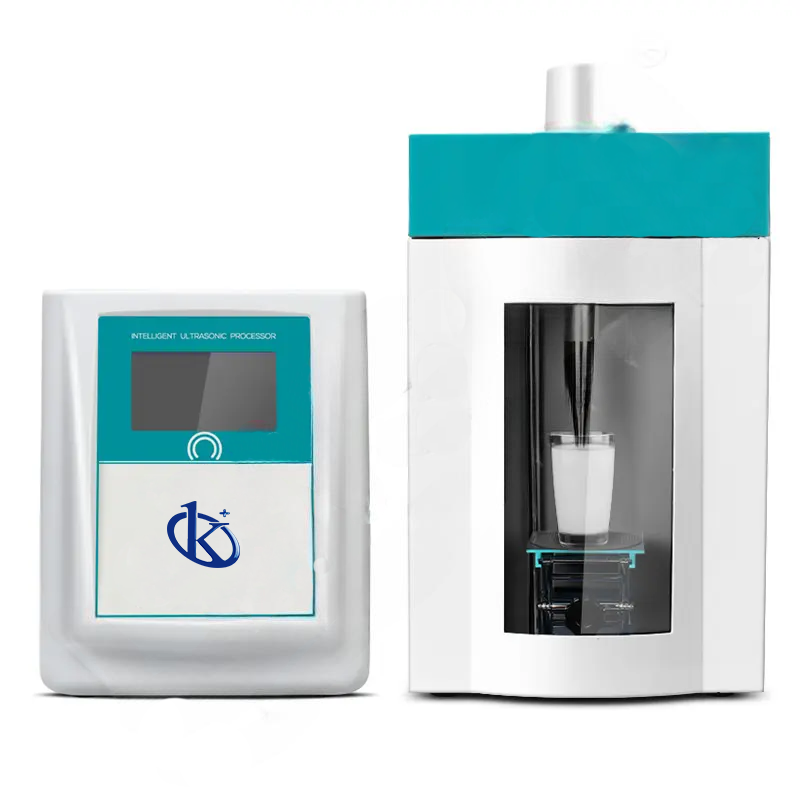
Ultrasonic Homogenizers: Practical Applications and Techniques 2026
Ultrasonic homogenizers are crucial tools in various laboratory settings, especially in clinical and hospital laboratories. These devices employ high-frequency sound waves to create cavitation bubbles in liquids, enabling effective mixing, emulsification, and disruption of cells. This article will delve into the practical applications, techniques, and best practices of ultrasonic homogenizers in 2026.
What is it used for in 2026
In 2026, ultrasonic homogenizers are primarily used for:
- Emulsification: Creating stable emulsions in food and cosmetic formulations.
- Cell Disruption: Breaking down cells for protein extraction in biological research.
- Particle Size Reduction: Achieving uniform particle sizes in pharmaceutical preparations.
- Homogenization: Ensuring uniform consistency in various liquid samples.
History and evolution of the technology
The ultrasonic homogenizer technology has evolved significantly since its inception. Initially, it emerged in the early 20th century, primarily used in research laboratories. Early models were bulky and lacked precision. Over the years, advancements in piezoelectric materials and digital controls have led to the development of compact, user-friendly devices with enhanced capabilities, including real-time monitoring and automation. Today's models incorporate touchscreen interfaces, allowing for greater control and precision.
How to use it step by step
- Select the appropriate homogenizer model: Choose a model based on your specific application needs.
- Prepare the sample: Measure and place your samples in appropriate containers.
- Set the parameters: Adjust the ultrasonic power, time, and temperature based on the protocol requirements.
- Insert the probe: Insert the ultrasonic probe into the sample, ensuring it is submerged adequately.
- Start the homogenization: Activate the device and monitor the process, ensuring parameters are maintained.
- Evaluate the outcome: Check the consistency and completeness of the homogenization process.
- Clean the equipment: Thoroughly clean the probe and surrounding area after use.
Best techniques and protocols
To optimize the use of ultrasonic homogenizers, consider the following techniques and protocols:
- Optimize power settings: Adjust power levels based on the sample type and volume.
- Use appropriate probes: Select probes that are suitable for different types of samples and desired outcomes.
- Implement pulse mode: Utilize pulse mode for sensitive samples to prevent overheating.
- Perform trials: Conduct preliminary tests to determine the best settings for your specific application.
Practical applications by laboratory type
Ultrasonic homogenizers find applications across various laboratory types:
- Clinical Laboratories: Used for sample preparation, extraction of nucleic acids, and emulsification of reagents.
- Pharmaceutical Laboratories: Ideal for formulating suspensions and emulsions, and ensuring consistent particle sizes.
- Food and Beverage Laboratories: Employed in the creation of stable emulsions and flavor extraction.
- Research and Development Laboratories: Utilized for various experiments requiring precise mixing and particle size control.
Regulations, standards and certifications
In 2026, laboratories must adhere to various regulations and certifications when using ultrasonic homogenizers:
- ISO 9001: Ensures quality management systems are in place.
- GMP (Good Manufacturing Practices): Important in pharmaceutical and food industries to ensure product safety and efficacy.
- CE Marking: Indicates compliance with health, safety, and environmental protection standards for products sold within the European Economic Area.
Comparison with alternative technologies
Ultrasonic homogenizers offer several advantages over alternative technologies:
- Mechanical Homogenizers: While effective, they often produce uneven particle sizes compared to ultrasonic homogenizers.
- High-Pressure Homogenizers: Require higher maintenance and operational costs, whereas ultrasonic homogenizers are more cost-effective.
- Stirring and Mixing: Conventional mixing methods do not achieve the same level of emulsification and cell disruption as ultrasonic homogenizers.
Comparison of available models
| Model | Best for | Key specs | Recommended use case |
|---|---|---|---|
| YR05015 | Small sample emulsification | Power: 1.5 – 150W, Capacity: 0.1 – 150 ml | Ideal for laboratory-scale emulsions and cell disruption. |
| YR05016 | Medium sample homogenization | Power: 2-5 – 250W, Capacity: 0.1 – 300 ml | Suitable for moderate-sized laboratory applications. |
| YR05017 | High-throughput applications | Power: 10 – 650W, Capacity: 0.1 – 500 ml | Best for rapid sample processing in research settings. |
| YR05018 | Extensive emulsification | Power: 10 – 900W, Capacity: 0.1 – 600 ml | Effective for thorough emulsification in pharmaceutical applications. |
| YR05019 | Laboratory-grade bulk processing | Power: 20 – 1,200W, Capacity: 1 – 1,000 ml | Designed for larger batches requiring homogenization. |
| YR05020 | Industrial applications | Power: 50 – 1,800W, Capacity: 1 – 1,200 ml | Perfect for high-volume industrial homogenization. |
Common mistakes and how to avoid them
When using ultrasonic homogenizers, common mistakes include:
- Incorrect power settings: Always refer to the sample specifications before setting the power.
- Overheating samples: Monitor sample temperature, especially for sensitive materials.
- Neglecting cleaning: Ensure proper cleaning of probes after each use to avoid cross-contamination.
- Improper probe handling: Always use the correct probe size and technique to prevent damage.
Maintenance, calibration and good practices 2026
Proper maintenance and calibration are essential for optimal performance:
- Regular Calibration: Calibrate the equipment periodically to ensure accuracy.
- Daily Cleaning: Clean the probe and surrounding area after each use to maintain hygiene.
- Check for Wear: Inspect probes and parts regularly for wear and replace as necessary.
- Training: Ensure all users are trained in the proper operation and safety procedures.
Cost-benefit analysis 2026
Investing in ultrasonic homogenizers can yield significant benefits:
- Efficiency: Faster processing times lead to increased productivity.
- Quality: Enhanced homogenization quality results in improved product reliability.
- Versatility: Capable of handling various applications across multiple laboratory settings reduces the need for multiple types of equipment.
- Cost Savings: Lower operational costs compared to high-pressure homogenizers.
Frequently asked questions
How do I select the right ultrasonic homogenizer for my laboratory?
Select a model based on your sample size, type, and required processing capabilities. Compare specifications such as power output and capacity to match your needs.
What types of samples can be processed with ultrasonic homogenizers?
Ultrasonic homogenizers can process a variety of samples, including liquids, emulsions, suspensions, and even solid-liquid mixtures, depending on the model.
What precautions should I take while using an ultrasonic homogenizer?
Wear appropriate personal protective equipment, monitor sample temperature, and ensure proper probe handling to avoid accidents and ensure sample integrity.
Can ultrasonic homogenizers be used for food applications?
Yes, ultrasonic homogenizers are widely used in the food industry for emulsification, extraction, and homogenization of various food products.
How often should I calibrate my ultrasonic homogenizer?
Calibration should be performed regularly, ideally every month, or more frequently if used in critical applications.
What are common troubleshooting steps if my homogenizer is not performing well?
Check power settings, ensure the probe is functioning and clean, and verify that the sample is suitable for ultrasonic processing.
Where can I request a quote for ultrasonic homogenizers?
You can request a quote for ultrasonic homogenizers through our online platforms, where you can find detailed product information and pricing.
If you are looking for a fusion of innovation and quality, you have come to the right place. At Kalstein, we offer you the luxury of exploring our exclusive catalog of laboratory equipment. We manufacture every device to the highest standards of excellence. Our intuitive and seamless online purchasing channels are designed for your convenience, securing the most competitive prices. Hesitate no longer — we bring science to life, it is time to become part of our community.