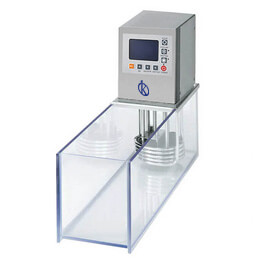
Transparent Water Baths: ROI and Cost-Benefit Analysis for the Lab 2026
As laboratories strive for efficiency and cost-effectiveness, understanding the return on investment (ROI) and cost-benefit analysis of equipment is paramount. Transparent water baths serve as essential tools in various laboratory processes, including tissue culture, enzymatic reaction studies, and growth observation. This article will delve into the ROI and cost-effectiveness of transparent water baths, specifically examining the models available, their performance metrics, and how they align with laboratory needs in 2026.
Understanding Water Baths Through the Lens of ROI
Transparent water baths, like the YR05081 and YR05082 models, can significantly enhance laboratory workflows. These devices provide reliable temperature control, crucial for maintaining optimal conditions for experiments. By analyzing the initial and operational costs against the benefits gained in terms of productivity and experimental success, laboratories can make informed decisions about which model suits their specific requirements.
Comparison of Available Models
| Model | CAPEX (USD) | Cost per Test | Payback Period (months) | Recommended Scenario |
|---|---|---|---|---|
| YR05080 | 293.00 | 1.00 | 6 | Small laboratories requiring basic temperature control |
| YR05081 | 403.00 | 1.50 | 8 | Medium-sized labs with diverse applications |
| YR05082 | 513.00 | 2.00 | 10 | Large laboratories focusing on advanced research |
Key Metrics Affecting ROI for Transparent Water Baths
When evaluating the ROI of transparent water baths, several key metrics should be considered. These include the initial capital expenditure (CAPEX), operational costs (OPEX), and the expected lifespan of the equipment. By also considering the number of tests performed per day and the value of results generated, labs can calculate the cost per test and estimate the payback period effectively.
Operational Cost Analysis: Calculating OPEX
Calculating the operational costs associated with each model involves assessing energy consumption, maintenance costs, and the cost of consumables. For instance, the YR05081 has an operational cost of approximately $1.50 per test due to its energy efficiency, compared to $2.00 for the YR05082, which could affect overall ROI in labs with high testing volumes.
Benefits of Investing in Quality Equipment
Investing in high-quality transparent water baths like the YR05081 and YR05082 provides substantial long-term benefits that can justify the initial investment. A reliable water bath ensures consistent temperature control, enhancing experimental accuracy and reducing the chances of costly errors in laboratory testing.
Common Mistakes and How to Avoid Them
Many laboratories undervalue the importance of choosing the right model based on specific needs. Selecting a water bath based on price alone can lead to higher operational costs and lower ROI. It’s crucial to evaluate performance metrics and consult with experts to ensure a well-informed purchase decision.
Frequently Asked Questions
What is the ROI I can expect from using a Transparent Water Bath in 2026?
The ROI from using a Transparent Water Bath, such as the YR05081, can typically be realized within 6 to 10 months, depending on your lab's operational scale and testing frequency.
How do operational costs of different Transparent Water Baths compare?
The operational costs vary among models; for instance, the YR05081 has a cost of about $1.50 per test, while the YR05082 reaches $2.00 per test, affecting the overall ROI calculations.
Which Transparent Water Bath model is best for small labs?
The YR05080 is ideal for small labs, with a CAPEX of $293.00 and lower operational costs, making it a smart choice for budget-conscious environments.
What are the maintenance requirements for Transparent Water Baths?
Maintenance for Transparent Water Baths typically includes regular checks on temperature accuracy and cleanliness. Models like the YR05082 offer advanced features that minimize maintenance time.
How does the temperature range of Transparent Water Baths affect their ROI?
A broader temperature range, such as the RT to 80°C in the YR05081 and YR05082, allows for greater versatility in experiments, thereby improving ROI by accommodating various lab applications.
What factors influence the payback period for a Transparent Water Bath?
The payback period is influenced by initial cost, operational efficiency, and the volume of tests conducted. For example, the YR05081 typically has a payback period of 8 months.
Can investing in a higher-capacity Transparent Water Bath save costs?
Yes, investing in a higher-capacity model like the YR05082 can save costs in the long run by increasing throughput and reducing the cost per test.
What should I consider when choosing a Transparent Water Bath for research purposes?
Consider aspects such as temperature stability, capacity, and operational costs. Models like the YR05082 are designed for advanced research and may offer benefits that justify their higher price.
If you are looking for a fusion of innovation and quality, you have come to the right place. At Kalstein, we offer you the luxury of exploring our exclusive catalog of laboratory equipment. We manufacture every device to the highest standards of excellence. Our intuitive and seamless online purchasing channels are designed for your convenience, securing the most competitive prices. Hesitate no longer — we bring science to life, it is time to become part of our community.