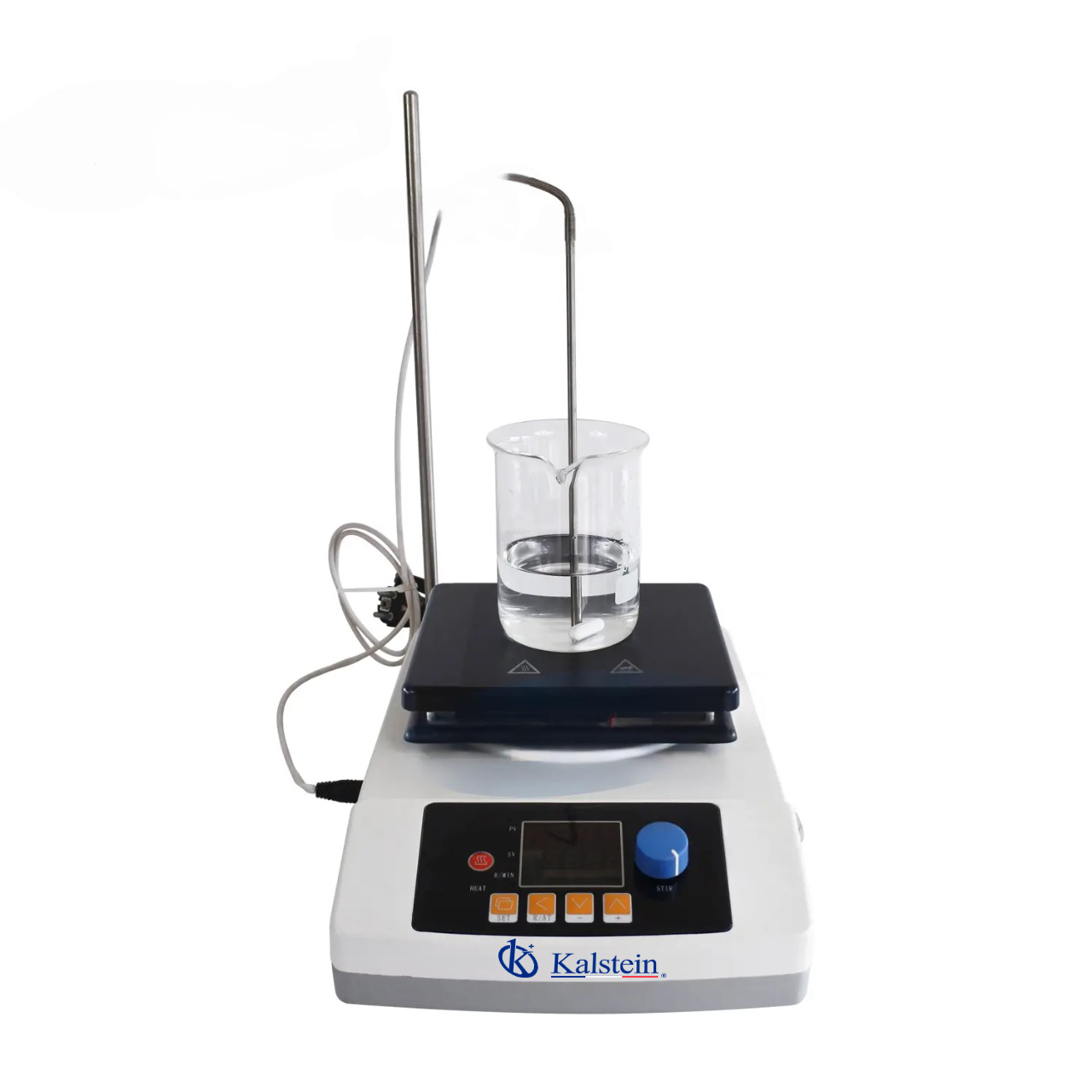
Intelligent Digital Display Ceramic Top Hotplate Stirrer: Applications in Research, Biotechnology and Academia 2026
The Intelligent Digital Display Ceramic Top Hotplate Stirrer is a versatile piece of laboratory equipment that plays a crucial role in various fields such as chemistry, biology, and biotechnology. In this article, we will explore its applications, techniques, and best practices for using these stirrers effectively in research and academic labs in 2026.
What is it used for in 2026
In 2026, Intelligent Digital Display Ceramic Top Hotplate Stirrers are primarily used for mixing liquids at controlled temperatures in laboratory environments. Their precise temperature control and stirring capabilities make them ideal for a variety of applications including:
- Heating and stirring of solutions in chemical reactions.
- Preparing biological samples for experiments.
- Conducting assays that require stable temperatures.
- Mixing reagents in biochemical research.
- Carrying out sensitive experiments in academic settings.
History and evolution of the technology
The technology behind hotplate stirrers has evolved significantly over the decades. Early models were basic mechanical devices with limited features, primarily designed for simple heating tasks. With advancements in digital technology, modern hotplate stirrers now incorporate PID temperature control, digital displays, and enhanced safety features. This evolution has enabled laboratories to achieve greater precision and efficiency, making these devices indispensable in contemporary scientific research.
How to use it step by step
Using an Intelligent Digital Display Ceramic Top Hotplate Stirrer involves a few simple steps:
- Setup: Place the stirrer on a stable surface in a well-ventilated area away from flammable materials.
- Connect: Plug in the device and ensure it is connected to a power source.
- Select Temperature: Use the digital display to set your desired temperature. Remember to consider the boiling point of your solution.
- Add Sample: Pour your liquid sample into a suitable container, such as a beaker, and place it on the hotplate surface.
- Stirring Speed: Choose the appropriate stirring speed using the digital controls, usually between 100-2000 RPM, depending on viscosity.
- Monitoring: Keep an eye on the temperature and stirring speed during the process to ensure optimal results.
- Shutdown: Once your experiment is complete, turn off the device and unplug it for safety.
Best techniques and protocols
To achieve reliable results with Intelligent Digital Display Ceramic Top Hotplate Stirrers, consider the following techniques:
- Always preheat the device before introducing your sample to ensure accurate temperature control.
- Use appropriate containers made of materials that can withstand the heat and are compatible with your samples.
- Maintain a consistent stirring speed to ensure uniform mixing and prevent localized overheating.
- Periodically check the calibration of the temperature settings to verify accuracy.
- Document your processes and results for reproducibility in future experiments.
Practical applications by laboratory type
Different laboratory types have unique applications for Intelligent Digital Display Ceramic Top Hotplate Stirrers:
- Chemical Laboratories: Used for synthesizing compounds and reaction monitoring.
- Biological Research: Ideal for preparing samples, culturing cells, and performing enzyme assays.
- Educational Institutions: Used in teaching labs for experiments that illustrate scientific principles such as thermodynamics and reaction kinetics.
- Pharmaceutical Labs: Essential for drug formulation processes requiring precise temperature control.
- Environmental Testing: Employed for analyzing water and soil samples under controlled conditions.
Regulations, standards and certifications
When using Intelligent Digital Display Ceramic Top Hotplate Stirrers, it's essential to adhere to safety regulations and standards:
- Ensure compliance with OSHA (Occupational Safety and Health Administration) standards for lab equipment.
- Follow ASTM (American Society for Testing and Materials) guidelines for temperature control and materials used in laboratories.
- Look for certifications such as CE and ISO that indicate compliance with international safety and quality standards.
- Stay updated with local regulations regarding laboratory equipment to ensure safety and compliance.
Comparison with alternative technologies
When considering the best equipment for mixing and heating, it's helpful to compare Intelligent Digital Display Ceramic Top Hotplate Stirrers with other technologies:
- Magnetic Stirring Hotplates: Often quieter and more efficient, but may not provide the same level of temperature control.
- Standard Hotplates: Generally less expensive but lack digital displays and precise temperature control.
- Ultrasonic Bath Mixers: Excellent for high-viscosity liquids but not ideal for heating applications.
- Mechanical Stirrers: More durable but can be bulkier and harder to manage compared to digital models.
Comparison of available models
| Model | Best for | Key specs | Recommended use case |
|---|---|---|---|
| YR02937 | Small volume experiments | 140x140 mm, PID control, 100-2000 RPM | Temperature-sensitive chemical reactions |
| YR02938 | General laboratory use | 180x180 mm, PID control, +/- 1 g accuracy | Mixing and heating various samples |
| YR02939 | Large volume applications | 230x230 mm, 750 W power, RT-380 °C range | Preparing biological samples |
| YR02940 | Higher capacity heating | 280x280 mm, PID control, up to 325 °C | Pharmaceutical drug formulation |
| YR02941 | Compact and efficient | 140x140 mm, PID control, 325 °C max | Educational experiments in classrooms |
| YR02942 | Versatile laboratory tasks | 180x180 mm, PID control, +/- 1 °C accuracy | Environmental testing and analysis |
Common mistakes and how to avoid them
Here are some common mistakes made when using hotplate stirrers and how to avoid them:
- Incorrect Temperature Settings: Always double-check the temperature before starting an experiment to prevent overheating or underheating.
- Improper Container Selection: Use only compatible containers that can withstand the heating process to avoid breakage.
- Neglecting Calibration: Regularly calibrate the device to maintain accuracy in temperature readings.
- Ignoring Safety Protocols: Always wear appropriate PPE (Personal Protective Equipment) and follow lab safety protocols.
Maintenance, calibration and good practices 2026
To ensure longevity and efficiency of your Intelligent Digital Display Ceramic Top Hotplate Stirrer, follow these maintenance tips:
- Regularly clean the surface to prevent chemical buildup.
- Perform routine checks to ensure all electronic components are functional.
- Calibrate the temperature settings at least once a month or before critical experiments.
- Store the device in a dry, dust-free environment when not in use.
Cost-benefit analysis 2026
In 2026, the cost-benefit analysis of using Intelligent Digital Display Ceramic Top Hotplate Stirrers reveals several advantages:
- Investments: While the initial cost may be higher compared to basic hotplates, the precision, durability, and efficiency lead to long-term savings.
- Operational Efficiency: Faster heating and mixing capabilities reduce experiment times, increasing overall productivity.
- Versatility: Suitable for a wide range of applications, minimizing the need for multiple devices.
- Safety Features: Enhanced safety features reduce the risk of accidents, thereby protecting laboratory personnel.
Frequently asked questions
What size of container is best to use with the ceramic top hotplate stirrer?
It is advisable to use containers that fit the dimensions of the hotplate stirrer for optimal heating and stirring performance. Ensure the container is stable and suitable for the temperature range.
How do I ensure accurate temperature readings?
Regularly calibrate your hotplate stirrer and check the accuracy of the temperature settings using a separate thermometer to ensure reliability.
Can I use the stirrer for highly viscous liquids?
Yes, but be cautious about the stirring speed and the temperature settings, as highly viscous liquids may require slower speeds to avoid splashing and ensure effective mixing.
What safety precautions should I take when using a hotplate stirrer?
Always wear appropriate personal protective equipment (PPE), such as gloves and goggles, and ensure that the workspace is free from flammable materials.
How often should I maintain my stirrer?
It is recommended to perform regular maintenance checks at least once a month and to clean the surface after each use to ensure optimal performance.
Is it safe to leave the stirrer unattended?
It is generally unsafe to leave a hotplate stirrer unattended, especially when heating. Always monitor the apparatus during use to prevent accidents.
How can I request a quote for a hotplate stirrer?
You can easily request a quote for any model by contacting customer service or visiting our online platform to explore our offerings.
If you are looking for a fusion of innovation and quality, you have come to the right place. At Kalstein, we offer you the luxury of exploring our exclusive catalog of laboratory equipment. We manufacture every device to the highest standards of excellence. Our intuitive and seamless online purchasing channels are designed for your convenience, securing the most competitive prices. Hesitate no longer — we bring science to life, it is time to become part of our community.