High-Voltage Power Supply: Applications and Best Practices 2026
What is it used for in 2026
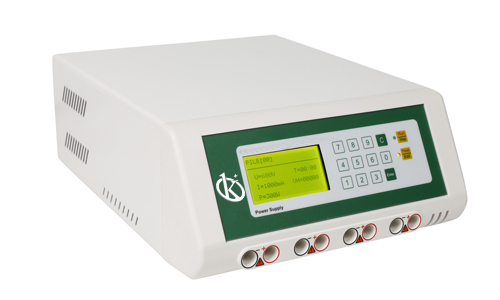
High-voltage power supplies are essential components in various laboratory settings, providing the necessary voltage and current for a wide range of applications, including electrophoresis, particle acceleration, and high-energy experiments. In 2026, these devices are utilized for their precision and reliability, enabling researchers to conduct experiments with consistent parameters and reproducible results.
History and evolution of the technology
The technology behind high-voltage power supplies has evolved significantly over the decades, with early models being rudimentary and often limited in functionality. Over time, advancements in microprocessor technology have led to the development of sophisticated systems capable of storing multiple methods and providing real-time feedback. The integration of touch controls and LCD displays has made these power supplies more user-friendly, fostering greater accessibility for laboratory professionals.
How to use it step by step
Using a high-voltage power supply involves several key steps:
- Setup: Place the power supply on a stable surface and connect it to a suitable power source.
- Connect the Load: Safely connect the output leads to the experiment or device requiring power.
- Configure Settings: Use the control panel to set the desired voltage, current, and power levels, ensuring they align with the requirements of your experiment.
- Monitor Performance: Observe output readings on the display and adjust settings as needed to maintain desired conditions.
- Record Data: Document the parameters and any observations during your experiment for future reference.
- Shutdown: Once the experiment is complete, turn off the power supply and safely disconnect the load.
Best techniques and protocols
For optimal performance of high-voltage power supplies in 2026, the following techniques and protocols should be adhered to:
- Calibration: Regularly calibrate the power supply to ensure accurate output readings.
- Temperature Control: Monitor and adjust for temperature variations, as they can affect performance.
- Safety Precautions: Always employ safety gear and follow protocols to avoid electrical hazards.
- Documentation: Keep detailed records of settings and outcomes to facilitate troubleshooting and improve future experiments.
Practical applications by laboratory type
High-voltage power supplies find applications across various types of laboratories:
- Research Laboratories: Used in experiments requiring precise voltage and current for reactions and analyses.
- Educational Institutions: Essential for teaching students about electrical principles and experimental techniques.
- Industrial Laboratories: Applied in quality control processes, ensuring that products meet electrical safety standards.
Regulations, standards and certifications
In 2026, high-voltage power supplies must adhere to various regulations and standards, including:
- ISO Standards: Ensuring quality management and operational efficiency.
- Electrical Safety Regulations: Compliance with national and international safety standards to prevent electrical hazards.
- CE Certification: Required for products sold in Europe, indicating compliance with health and safety standards.
Comparison with alternative technologies
While high-voltage power supplies are widely used, alternative technologies such as batteries and transformers exist. High-voltage power supplies offer precise control and higher output, whereas batteries provide portability and ease of use. Transformers can be less versatile in output regulation compared to advanced high-voltage power supplies.
Comparison of available models
| Model | Best for | Key specs | Recommended use case |
|---|---|---|---|
| YR03409 | High precision applications | 20–3000 V, 1–200 mA, 1–200 W | Electrophoresis with temperature control |
| YR03408 | Complex electrophoresis tasks | 20–5000 V, 1–200 mA, 1–100 W | Advanced laboratories needing multiple methodology storage |
| YR03405 | Standard laboratory applications | 10–600 V, 1–500 mA, 1–300 W | Basic electrophoresis and testing |
| YR03406 | Mid-range power applications | 20–1600 V, 1–100 mA, 1–160 W | Versatile applications requiring moderate output |
| YR03407 | High current applications | 20–3000 V, 1–400 mA, 1–400 W | Heavy-duty experiments needing high current |
Common mistakes and how to avoid them
Common mistakes when using high-voltage power supplies include:
- Incorrect Settings: Always double-check voltage and current settings before operation to prevent equipment damage.
- Neglecting Safety Protocols: Always wear appropriate safety gear and follow safety protocols during setup and operation.
- Failure to Document: Keep accurate records of experiments to avoid repeating mistakes and to aid in future projects.
Maintenance, calibration and good practices 2026
Proper maintenance and calibration practices include:
- Regular Calibration: Schedule periodic calibration to ensure accuracy and reliability of output.
- Cleaning: Keep the device and surrounding area clean to maintain optimal performance.
- Inspect Connections: Frequently check all connections for wear or damage to prevent malfunctions.
Cost-benefit analysis 2026
Investing in high-voltage power supplies can be justified through their ability to enhance experimental accuracy and reliability. Although initial costs may be high, the long-term benefits of improved productivity and research quality make them a valuable asset for laboratories. Comparing models, the YR03409 offers great precision for complex experiments, while the YR03407 is best for high current applications, balancing cost and functionality.
Frequently asked questions
What factors should I consider when choosing a high-voltage power supply?
Consider the application requirements, such as voltage range, current capacity, and available features like programmability and memory storage.
How do I ensure safe operation of a high-voltage power supply?
Always adhere to safety protocols, use personal protective equipment, and avoid working in wet conditions to minimize the risk of electrical shock.
Can I use a high-voltage power supply for electrophoresis?
Yes, high-voltage power supplies are ideal for electrophoresis, providing the needed voltage and stability for effective separation of biomolecules.
What is the importance of calibration for high-voltage power supplies?
Calibration ensures that the power supply delivers accurate voltage and current, which is critical for the reliability of experimental results.
How often should I maintain my high-voltage power supply?
Regular maintenance is recommended, ideally after every significant use or at least every six months, to ensure optimal performance.
What are the common applications for high-voltage power supplies?
Common applications include electrophoresis, particle acceleration, and various experimental setups requiring precise voltage control.
Where can I find high-voltage power supplies for my laboratory?
Request a quote on Kalstein Plus to explore a range of options tailored to your laboratory needs.
If you are looking for a fusion of innovation and quality, you have come to the right place. At Kalstein, we offer you the luxury of exploring our exclusive catalog of laboratory equipment. We manufacture every device to the highest standards of excellence. Our intuitive and seamless online purchasing channels are designed for your convenience, securing the most competitive prices. Hesitate no longer — we bring science to life, it is time to become part of our community.